
Top 5 Places to Visit in South Korea in 2026
South Korea is one of Asia’s most exciting travel destinations, combining centuries-old palaces and temples with futuristic cities, beautiful coastlines, volcanic landscapes, world-famous food, and an energetic pop-culture scene. In 2026, the country continues to offer far more than just Seoul: destinations such as Busan, Jeju, and Gyeongju provide completely different experiences and make it easy to build a varied itinerary. The Korea Tourism Organization’s current destination guides highlight Seoul, Busan, Gyeongju and Jeju among the country’s major attractions.
If you are planning your first trip to South Korea, choosing where to go can be difficult. The country may look relatively small on a map, but each region has its own personality, food traditions, landscapes and cultural attractions.
Here are the five best places to visit in South Korea in 2026, with suggestions on what to see, what makes each destination special, and how much time to spend there.
1. Seoul – The Best Place for First-Time Visitors
No trip to South Korea is complete without spending time in Seoul, the country's capital and its cultural, political and economic heart.
Seoul is an extraordinary combination of old and new. One moment you can be walking through the grounds of a Joseon-era palace; minutes later, you can find yourself surrounded by skyscrapers, high-end shopping malls, neon signs and cutting-edge technology.
For first-time visitors, Seoul is the easiest introduction to Korean culture because it offers an enormous variety of experiences within one city.
Gyeongbokgung Palace

Start your sightseeing at Gyeongbokgung Palace, arguably Seoul's most iconic historical attraction. Originally constructed in 1395 under King Taejo, the founder of the Joseon Dynasty, it served as the principal royal palace. The palace was subsequently destroyed and rebuilt, and a major restoration program that began in 1991 is still continuing.
The enormous courtyards, traditional gates, ornate buildings and mountain backdrop make it one of the best places in Seoul for photographs.
A popular experience is renting a traditional hanbok before exploring the palace. Wearing one while walking through the historic districts can make the visit feel much more immersive.
Bukchon Hanok Village

From Gyeongbokgung, walk toward Bukchon Hanok Village, where traditional Korean houses known as hanok line narrow, hilly streets.
The neighborhood provides a fascinating contrast with modern Seoul. At the same time, remember that Bukchon is a residential area, so visitors should keep noise down and respect private homes.
Myeongdong, Hongdae and Insadong

For shopping and food, Seoul has almost endless choices.
Myeongdong is particularly popular for Korean cosmetics, fashion and street food. Hongdae has a younger, more energetic atmosphere, with cafés, independent stores, restaurants and street performances. Insadong, meanwhile, is a better choice if you are interested in traditional crafts, tea houses and Korean culture.
The official Seoul tourism guide also highlights attractions ranging from the National Museum of Korea to Mangwon Market and contemporary entertainment experiences, demonstrating how diverse the city has become.
N Seoul Tower and the Han River
For panoramic views, head to Namsan and N Seoul Tower. Alternatively, spend an evening beside the Han River with takeaway Korean food and drinks.
Seoul is particularly enjoyable after sunset, when neighborhoods such as Myeongdong, Hongdae and Gangnam become illuminated.
How long should you stay?
Recommended: 4–5 days
Seoul deserves several days because there is simply too much to experience in one or two.
Best for: first-time visitors, shopping, nightlife, Korean food, history, K-pop and urban experiences.
2. Busan – Beaches, Seafood and Coastal Scenery
If Seoul represents modern urban Korea, Busan offers a more relaxed coastal personality.
South Korea's largest port city is famous for beaches, seafood, mountains and ocean views. The Korea Tourism Organization describes Busan as a major destination for visitors interested in beaches and events such as the Busan International Film Festival.
Busan is also an excellent second destination after Seoul because the atmosphere is noticeably different.
Haeundae Beach

Begin with Haeundae Beach, one of the most famous beaches in South Korea.
The wide sandy beach is surrounded by modern buildings, restaurants and cafés. During summer, it becomes especially lively, but it can be enjoyable throughout the year.
The nearby Dongbaek Coastal Trail provides an opportunity to escape the crowds and enjoy views of the sea. The official tourism guide also notes Haeundae's festivals and its connection to the Dongbaekseom coastal area.
Gwangalli Beach

Another favorite is Gwangalli Beach, particularly in the evening.
The highlight here is the view of Gwangan Bridge, which becomes dramatically illuminated after dark. Cafés and restaurants along the waterfront make it an ideal place to spend a relaxed evening.
Gamcheon Culture Village

For one of Busan's most recognizable photo opportunities, visit Gamcheon Culture Village.
Colorful houses climb the hillside, while murals, artworks, small cafés and independent shops fill the narrow streets. The neighborhood is quite different from the modern skyscrapers of Haeundae.
Because the area is hilly, comfortable shoes are highly recommended.
Jagalchi Market
Food lovers should make time for Jagalchi Market, one of Korea's best-known seafood markets.
Here, you can see the enormous variety of seafood associated with Busan's coastal culture and enjoy freshly prepared dishes.
Afterward, explore the nearby markets and streets around Nampo-dong.
Haedong Yonggungsa Temple

For something more peaceful, visit Haedong Yonggungsa, a Buddhist temple dramatically positioned beside the sea.
Its coastal setting makes it one of Busan's most memorable temples. Rather than being surrounded entirely by mountains, the complex overlooks the ocean, creating a particularly scenic experience.
How long should you stay?
Recommended: 3–4 days
Busan can comfortably be combined with Seoul on a first trip.
Best for: beaches, seafood, coastal photography, relaxed city life, markets and nightlife.
3. Jeju Island – South Korea's Natural Paradise
For travelers who want nature rather than large cities, Jeju Island is arguably the country's top choice.
Located south of the Korean Peninsula, Jeju is famous for volcanic landscapes, waterfalls, beaches, cliffs, hiking trails and distinctive local culture. The Korea Tourism Organization describes it as a premier destination known for beaches, waterfalls, cliffs and caves.
Seongsan Ilchulbong
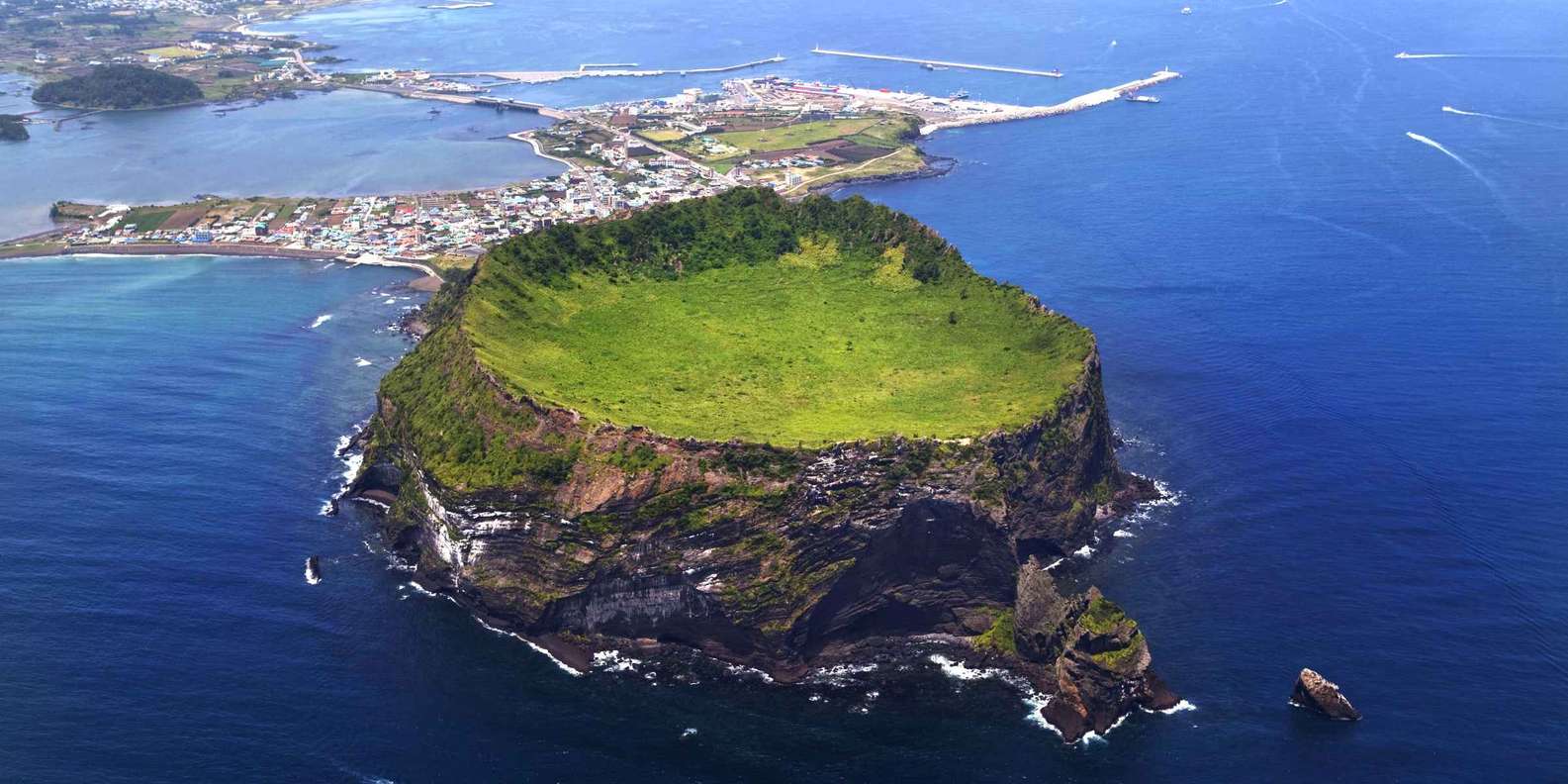
One of Jeju's most spectacular landmarks is Seongsan Ilchulbong, also known as Sunrise Peak.
This volcanic tuff cone rises dramatically from the sea and has been recognized as a UNESCO World Heritage natural site. The climb from the entrance to the summit takes roughly 20–30 minutes, according to Korea's official tourism information.
As its name suggests, sunrise is an especially popular time to visit.
The combination of ocean, volcanic rock and the enormous crater makes this one of the most distinctive landscapes in South Korea.
Hallasan National Park
Adventurous travelers should consider hiking Hallasan, South Korea's highest mountain at 1,947 meters.
The mountain sits in the center of Jeju and offers dramatically different scenery depending on altitude and season. The island's official tourism information lists several hiking routes, with the Seongpanak and Gwaneumsa courses leading toward the summit. These routes operate under visitor limits and reservation requirements to protect the environment.
If you do not want a demanding hike, there are shorter trails that allow you to experience the mountain without climbing all the way to the summit.
Jeju Olle Trails

Another excellent way to explore Jeju is through the Jeju Olle Trail network.
The routes collectively circle the island and pass through villages, beaches, forests, cliffs and countryside. The full network is hundreds of kilometers long, but visitors can select individual sections according to their fitness and available time.
Waterfalls, beaches and local food
Jeju also has beautiful waterfalls and coastal scenery.
Try local specialties such as Jeju black pork, seafood and the island's famous citrus products. Compared with Seoul, Jeju provides a slower pace and is particularly appealing for couples, photographers and outdoor enthusiasts.
How long should you stay?
Recommended: 3–5 days
Jeju is large enough that rushing around the island can become tiring. Renting a car can make exploring remote areas considerably easier, although public transportation is possible for travelers who plan carefully.
Best for: nature, hiking, beaches, photography, road trips and relaxing holidays.
4. Gyeongju – Korea's Ancient Capital
If Seoul shows you modern Korea, Gyeongju shows you Korea's ancient past.
Gyeongju was the capital of the Silla Kingdom for centuries and is filled with archaeological sites, temples, tombs and historic monuments. The Korea Tourism Organization describes it as the former capital of Silla and highlights its numerous UNESCO World Heritage sites.
It is one of the best destinations in South Korea for travelers interested in history.
Bulguksa Temple
The most famous attraction is Bulguksa Temple, an extraordinary Buddhist complex associated with the Silla period.
Together with Seokguram Grotto, Bulguksa was among Korea's first sites to be registered as UNESCO World Heritage in 1995. The official tourism organization describes the sites as masterpieces reflecting the religious and artistic achievements of the Silla Kingdom.
The temple's stone bridges, pagodas and carefully designed architecture make it worth visiting even if you are not particularly interested in religious history.
Seokguram Grotto

High on the slopes of Tohamsan Mountain is Seokguram Grotto, home to a monumental stone Buddha.
The combination of the mountain setting, Buddhist sculpture and architectural design makes this one of the country's most significant historical attractions.
Tumuli Park

Back in central Gyeongju, explore Tumuli Park, where enormous grassy burial mounds belonging to Silla royalty dominate the landscape.
The sight is unusual: rather than traditional rectangular tombs, the ancient royal graves appear as large green hills scattered across the city.
Donggung Palace and Wolji Pond
One of Gyeongju's most beautiful evening attractions is Donggung Palace and Wolji Pond.
The reconstructed palace complex surrounds a peaceful pond, and the buildings become especially atmospheric after sunset when they are illuminated and reflected in the water.
The official tourism information lists the site as a Historic Site of Korea and highlights its accessibility from central Gyeongju.
How long should you stay?
Recommended: 1–2 days
Gyeongju can be visited as a day trip from Busan, but staying overnight allows you to experience the historic sites without rushing.
Best for: history, temples, UNESCO heritage, photography and travelers interested in traditional Korea.
5. Andong – Traditional Korea and Hahoe Village
For travelers looking for an experience that feels more traditional and less metropolitan, Andong is an excellent choice.
Andong is particularly famous for Hahoe Folk Village, a UNESCO World Heritage site that preserves traditional architecture and aspects of Korean cultural heritage.
The Korea Tourism Organization lists Hahoe Village as both a Korean Folk Cultural Heritage site and a UNESCO World Cultural Heritage site.
Hahoe Folk Village
The village is surrounded by beautiful natural scenery and features traditional Korean houses, many of which have been preserved over generations.
Unlike a museum built solely for tourists, Hahoe provides insight into the traditional organization of Korean village life.
Visitors can walk through the lanes, admire the architecture and learn about the customs and traditions associated with the region.
Traditional Korean Culture

Andong is strongly associated with Confucian culture, traditional ceremonies, folk performances and Korean mask traditions.
The destination therefore provides a different experience from Seoul's shopping districts or Busan's beaches.
If your idea of a perfect holiday involves learning about local traditions, eating regional food and photographing historic architecture, Andong deserves consideration.
Why visit in 2026?
South Korea's tourism industry increasingly encourages visitors to explore destinations beyond Seoul. The current Korea Tourism Organization site is actively promoting travel beyond the capital, including regional destinations and itineraries.
That makes Andong particularly interesting for travelers who want to experience a quieter side of the country.
How long should you stay?
Recommended: 1–2 days
Andong works especially well as part of a broader route through Gyeongsangbuk-do, potentially combined with Gyeongju.
Best for: traditional culture, heritage, architecture, history and slower-paced travel.
Best Time to Visit South Korea in 2026
South Korea has four distinct seasons, and the best time depends on what you want to experience.
Spring: March to May
Spring is one of the most popular seasons because of pleasant temperatures and blooming flowers.
April is particularly attractive for travelers hoping to see cherry blossoms, although exact flowering dates vary from year to year.
Summer: June to August
Summer is hot and humid, with periods of heavy rain. However, it is also a good season for beaches, particularly in Busan and Jeju.
If you dislike heat and humidity, consider spring or autumn instead.
Autumn: September to November
Autumn is arguably the best all-around season.
Temperatures are comfortable, skies are often clear, and mountains and parks can become spectacular with fall colors.
Winter: December to February
Winter can be cold, particularly in Seoul and northern regions, but it is an excellent season for snow lovers and winter sports. Pyeongchang, for example, is highlighted by Korea's tourism organization as a destination for winter sports.
Suggested 10-Day South Korea Itinerary
If you have around ten days, a balanced itinerary could look like this:
Days 1–4: Seoul
Explore Gyeongbokgung Palace, Bukchon Hanok Village, Insadong, Myeongdong, Hongdae and the Han River.
Days 5–7: Busan
Visit Haeundae Beach, Gamcheon Culture Village, Jagalchi Market, Gwangalli Beach and Haedong Yonggungsa.
Day 8: Gyeongju
Explore Bulguksa, ancient tombs and Donggung Palace and Wolji Pond.
Days 9–10: Jeju
Fly to Jeju and visit Seongsan Ilchulbong and one of the island's scenic coastal areas. If you have more time, extend the stay to three or four days.
If traditional culture is more important to you than beaches, consider replacing one or two days in Jeju with Andong.
Final Thoughts
South Korea in 2026 offers an unusually diverse travel experience. Seoul is the best introduction to modern Korean life, combining palaces, shopping, food, entertainment and nightlife. Busan adds beaches, seafood and spectacular coastal scenery. Jeju Island is the natural escape, with volcanoes, hiking trails and dramatic coastlines. Gyeongju takes you deep into Korea's ancient history, while Andong provides one of the country's strongest connections to traditional culture.
For a first trip, I would prioritize Seoul, Busan, Gyeongju and Jeju. If you have two weeks or more, adding Andong can make the journey considerably more culturally rewarding.
The biggest mistake is trying to see everything too quickly. South Korea rewards slower travel: spend an evening eating street food in Seoul, watch the sunset over Busan's coastline, walk through Gyeongju after dark, or spend a quiet morning exploring Jeju's volcanic landscape.
In other words, the best South Korea itinerary isn't simply about checking famous attractions off a list. It is about experiencing the remarkable contrast between ancient traditions and one of Asia's most dynamic modern societies.


0 Comments